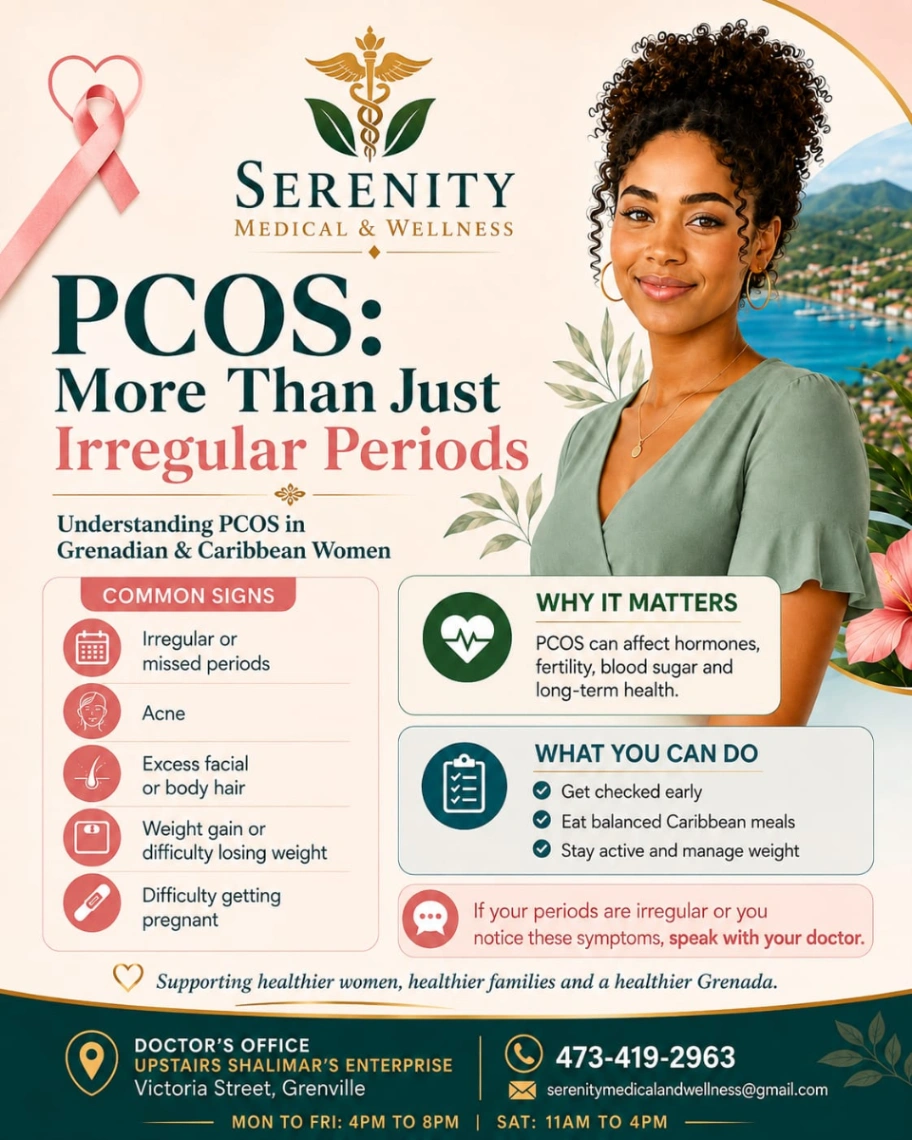


Understanding Polycystic Ovary Syndrome in Grenadian and Caribbean Women
Serenity Health and Wellness
Polycystic Ovary Syndrome, commonly called PCOS, is one of the most common hormonal conditions affecting women of reproductive age. Yet many women may live with the condition for years without realizing that their irregular periods, difficulty losing weight, acne, unwanted facial hair, or problems becoming pregnant may all be connected.
Here in Grenada and throughout the Caribbean, conversations surrounding reproductive and hormonal health are becoming increasingly important. PCOS should be part of that conversation.
What Is PCOS?
PCOS is a hormonal and metabolic condition in which the normal balance of reproductive hormones is disrupted. Women with PCOS may have higher-than-normal levels of androgens - hormones that are often referred to as "male hormones," although women naturally produce them as well.
PCOS can also interfere with normal ovulation, causing menstrual periods to become irregular or sometimes stop altogether.
Despite the name, you do not necessarily have to have ovarian cysts to have PCOS.
What Are the Common Signs?
PCOS can look very different from one woman to another. Some women have mild symptoms, while others experience several problems at the same time.
· Irregular, infrequent or absent periods
· Heavy or prolonged menstrual bleeding
· Difficulty becoming pregnant
· Excess facial or body hair
· Persistent acne
· Oily skin
· Thinning hair or hair loss from the scalp
· Weight gain or difficulty losing weight
· Darkened, thickened skin around the neck, underarms, groin or beneath the breasts
· Skin tags
· Difficulty controlling blood sugar
Some women with PCOS are overweight, while others have a completely normal body weight. You cannot rule out PCOS simply because someone is slim.
PCOS and the Caribbean Lifestyle
PCOS is particularly important to discuss in our region because metabolic conditions such as obesity, insulin resistance, type 2 diabetes, high blood pressure and high cholesterol are already significant health concerns throughout the Caribbean.
Many traditional Caribbean foods can form part of a healthy diet. The problem is often portion size, frequent consumption of highly refined carbohydrates, fried foods and sweetened beverages.
Large amounts of white rice, white bread, sweet drinks, pastries and highly processed foods can cause rapid increases in blood sugar. In women with insulin resistance, this can make PCOS more difficult to manage.
This does not mean abandoning Grenadian or Caribbean food. A plate containing grilled fish or chicken, provisions in appropriate portions, callaloo, pumpkin, vegetables, peas, beans and fresh local fruit can still form part of an excellent PCOS-friendly lifestyle.
The goal is balance - not starvation and not eliminating our culture from our diet.
What Does Insulin Have to Do With PCOS?
One of the most important features of PCOS is insulin resistance. Insulin is the hormone that helps move glucose from the bloodstream into our cells. When the body becomes resistant to insulin, the pancreas compensates by producing more of it.
High insulin levels can stimulate the ovaries to produce more androgens. This can contribute to irregular periods, difficulty ovulating, facial hair, acne, weight gain and difficulty losing weight.
Over time, insulin resistance can also increase a woman's risk of developing prediabetes and type 2 diabetes.
PCOS and Fertility
One of the greatest concerns many young women have after receiving a diagnosis of PCOS is: "Will I be able to have children?"
In many cases, the answer is yes. PCOS can make pregnancy more difficult because ovulation may occur irregularly. However, many women with PCOS become pregnant naturally, while others may require treatment to help restore regular ovulation.
Having PCOS does not automatically mean that you are infertile. Early diagnosis, healthy lifestyle changes and appropriate medical treatment can significantly improve reproductive health.
How Is PCOS Diagnosed?
There is no single blood test that diagnoses PCOS. Your doctor will usually consider your menstrual history, symptoms, physical examination and, when appropriate, laboratory investigations.
· Blood glucose or HbA1c
· Cholesterol and triglycerides
· Thyroid function testing
· Testosterone or other hormone levels
· Prolactin
· Pregnancy testing when appropriate
A pelvic ultrasound may also be recommended in some patients.
Importantly, other medical conditions can produce symptoms similar to PCOS, so proper assessment is important before making the diagnosis.
Does PCOS Only Affect Periods and Fertility?
No. PCOS should be considered a whole-body condition, not simply a menstrual problem.
· Prediabetes
· Type 2 diabetes
· High cholesterol
· High blood pressure
· Obesity
· Fatty liver disease
· Sleep apnoea
· Difficulties with fertility
Women who go for long periods without menstruating may also develop excessive thickening of the lining of the womb. This is another reason why persistent menstrual irregularities should not simply be ignored.
Treatment Is Individual
There is no single treatment plan that works for every woman. Treatment depends on your symptoms, medical history, weight, laboratory results and whether pregnancy is currently desired.
Management may include lifestyle changes, medications to regulate menstruation, treatments for excess hair or acne, medications that improve insulin sensitivity, and fertility treatment when necessary.
Even a relatively modest reduction in body weight in women who are overweight can sometimes improve insulin resistance, menstrual regularity and ovulation.
Start With the Basics
For many Caribbean women with PCOS, some of the most powerful interventions begin at home.
· Aim for regular physical activity, including both cardiovascular exercise and resistance training.
· Choose water more often instead of juice, soft drinks and other sweetened beverages.
· Increase vegetables, legumes and other fibre-rich foods.
· Choose appropriate portions of ground provisions, rice and other starches rather than eliminating them entirely.
· Include adequate protein such as fish, chicken, eggs, beans and peas.
· Reduce frequent consumption of highly processed foods, fried foods and refined sugars.
· Be consistent rather than attempting extreme diets that cannot be maintained.
Don't Ignore Your Period
It is common to hear women say: "My period has always been irregular, so that's normal for me."
Something being common for you does not necessarily mean it should not be investigated.
If your periods repeatedly disappear for months, are extremely irregular, have suddenly changed, or are associated with other symptoms such as excessive facial hair, acne or difficulty becoming pregnant, speak with your doctor.
When Should You Get Checked?
Consider speaking with your doctor if you:
· Frequently miss periods
· Have very irregular menstrual cycles
· Have excessive facial or body hair
· Have persistent acne
· Have unexplained weight gain or difficulty losing weight
· Notice darkening of the skin around your neck or underarms
· Have been trying to become pregnant without success
· Have a strong family history of diabetes
· Have previously been told that your blood sugar is elevated
The Take-Home Message
PCOS is common, treatable and manageable.
It does not define your femininity. It does not automatically mean you cannot become pregnant. And it should not be dismissed as simply "bad periods."
For women throughout Grenada and the wider Caribbean, earlier recognition of PCOS provides an opportunity not only to improve menstrual and reproductive health, but also to reduce the future risk of diabetes, cardiovascular disease and other metabolic complications.
If something about your menstrual cycle or hormonal health does not seem right, get it checked.
Your period can tell us much more about your health than you may realize.
Supporting healthier women, healthier families and a healthier Grenada.
With Warmest Regards,
Dr. Daniel Harford
General Practitioner
CEO and Medical Director