

High Blood Pressure in Grenada: Know Your Numbers and Protect Your Health
Dear Reader,
High blood pressure — also called hypertension — is one of the most common chronic health conditions affecting Grenadians. It is sometimes called the “silent killer” because most people experience no warning signs, even while it is gradually damaging the heart, brain, kidneys and blood vessels.
According to the World Health Organization’s 2023 country profile, approximately 27,000 Grenadian adults between the ages of 30 and 79 were living with hypertension. The report also estimated that thousands more people would need effective treatment for Grenada to achieve a 50% blood pressure control rate. WHO: Hypertension Grenada 2023 Country Profile
This makes regular blood-pressure checks essential — even when you feel perfectly well.
What Is Blood Pressure?
Blood pressure measures the force of blood pushing against the walls of your arteries. It is recorded using two numbers:
Systolic pressure: the top number, measured when the heart contracts
Diastolic pressure: the bottom number, measured when the heart relaxes
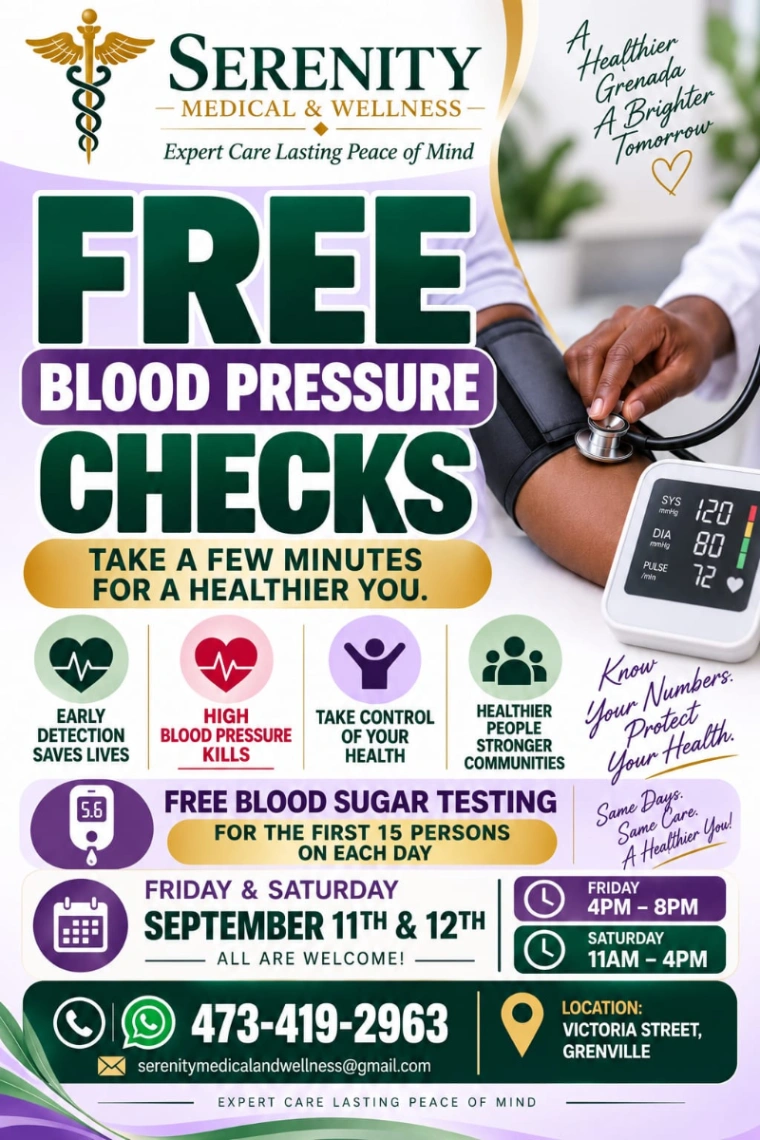
For example, a reading may be written as 120/80 mmHg.
A blood pressure that remains at or above 140/90 mmHg is generally considered hypertension in a clinical setting. However, one high reading does not always mean that you have hypertension. Stress, pain, illness, caffeine, recent exercise and anxiety can temporarily raise the reading. Diagnosis normally requires properly taken measurements on more than one occasion, unless the pressure is extremely high or there are signs of organ damage. However, according to the American College of Cardiology most recent guidelines, high blood pressure is considered a reading that is above 130/80 mmHG .
Why Is Hypertension a Concern in Grenada?
Grenada continues to experience a significant burden from non-communicable diseases, including hypertension, diabetes, obesity, heart disease, stroke and kidney disease.
Several common lifestyle factors can contribute to high blood pressure:
Frequent consumption of salty or highly processed foods
Seasoning cubes, powdered seasonings and salty sauces
Salted meats and fish
Canned meats, soups and vegetables with added sodium
Fried foods and meals high in saturated fat
Limited physical activity
Excess body weight
Heavy alcohol consumption
Smoking
Poor sleep and prolonged stress
A family history of hypertension
Our traditional Grenadian diet can be nutritious, particularly when it includes fresh local vegetables, fruits, provisions, peas, beans and fish. The difficulty often comes from how meals are prepared—especially the amount of salt, seasoning cubes, processed meat, fatty meat and oil added during cooking.
Hypertension Usually Has No Symptoms
Many people believe that high blood pressure always causes headaches, dizziness or neck pain. This is not true. Most people with hypertension have no symptoms at all.
When symptoms such as severe headache, blurred vision, chest discomfort or shortness of breath occur, the pressure may already be dangerously elevated, or a complication may be developing.
The only reliable way to know your blood pressure is to have it measured.
Who Should Get Checked?
Every adult should know his or her blood-pressure numbers. Checks that are more frequent are especially important if you:
Are overweight
Have diabetes or high cholesterol
Have kidney or heart disease
Have a close relative with hypertension or stroke
Smoke or consume alcohol frequently
Eat a diet high in salt
Are physically inactive
Previously had a high reading
Had high blood pressure during pregnancy
Are taking medication that can raise blood pressure
Hypertension is not limited to older adults. Younger Grenadians can also develop it, particularly when obesity, an unhealthy diet, limited activity or a strong family history is present.
What Happens If It Is Not Controlled?
Over time, uncontrolled hypertension can lead to:
Stroke
Heart attack
Heart failure
Kidney disease or kidney failure
Poor circulation
Vision loss
Sexual dysfunction
Memory and cognitive problems
Premature death
These complications often develop silently. Taking treatment only when you “feel your pressure is high” does not provide reliable protection.
How Can You Lower Your Blood Pressure?
Reduce salt
Taste your food before adding salt. Reduce the use of seasoning cubes, powdered seasonings, salty sauces, canned meats and heavily salted foods. Use garlic, onion, chive, thyme, shadow beni, pepper, ginger, lime and other herbs or spices to add flavour.
Eat more local whole foods
Choose more callaloo, pumpkin, carrots, tomatoes, cabbage, christophene, breadfruit, green banana, sweet potato, peas, beans and fresh fruit. Pay attention to portion sizes and preparation methods, especially when managing your weight or blood sugar.
Become more active
Aim for regular physical activity, such as brisk walking, swimming, dancing, cycling or structured exercise. Start gradually if you have been inactive or have other medical conditions.
Maintain a healthier weight
Even modest weight loss can improve blood pressure and reduce the risk of diabetes, heart disease and sleep apnea.
Limit alcohol and avoid smoking
Alcohol can raise blood pressure and interfere with some medications. Smoking damages blood vessels and greatly increases cardiovascular risk.
Take your medication consistently
Do not stop your tablets because your pressure becomes normal. A normal reading usually means that the medication and lifestyle changes are working. Stopping treatment without medical advice may cause the pressure to rise again.
Measuring Blood Pressure at Home
For a more accurate home reading:
Avoid caffeine, smoking and exercise for at least 30 minutes beforehand.
Empty your bladder.
Sit quietly for five minutes.
Keep your back supported and both feet flat on the floor.
Place the cuff on a bare upper arm supported at heart level.
Use the correct cuff size—an undersized cuff may produce a falsely high result.
Take two readings about one minute apart and record both.
Bring your readings and medication list to your medical appointments.
When Is High Blood Pressure an Emergency?
A reading of 180/120 mmHg or higher is severely elevated and should be repeated after approximately five minutes of quiet rest.
Seek emergency medical care immediately if it remains very high and you have:
Chest pain
Severe shortness of breath
Weakness or numbness on one side
Difficulty speaking
Confusion
Fainting
Sudden visual changes
A severe or unusual headache
If the reading remains at or above 180/120 mmHg but you have no symptoms, contact a healthcare professional promptly for instructions. Do not take extra medication unless specifically advised.
Know Your Numbers
High blood pressure is common, but it can be controlled. Early detection, healthier food choices, physical activity, consistent medication and regular medical follow-up can significantly reduce your risk of stroke, heart attack and kidney disease.
Do not wait for symptoms. Check your blood pressure, know your numbers and take action early.
Regards.
Dr. Daniel Harford MD
General Practitioner
CEO and Medical Director
Serenity Medical & Wellness
Expert Care. Lasting Peace of Mind