
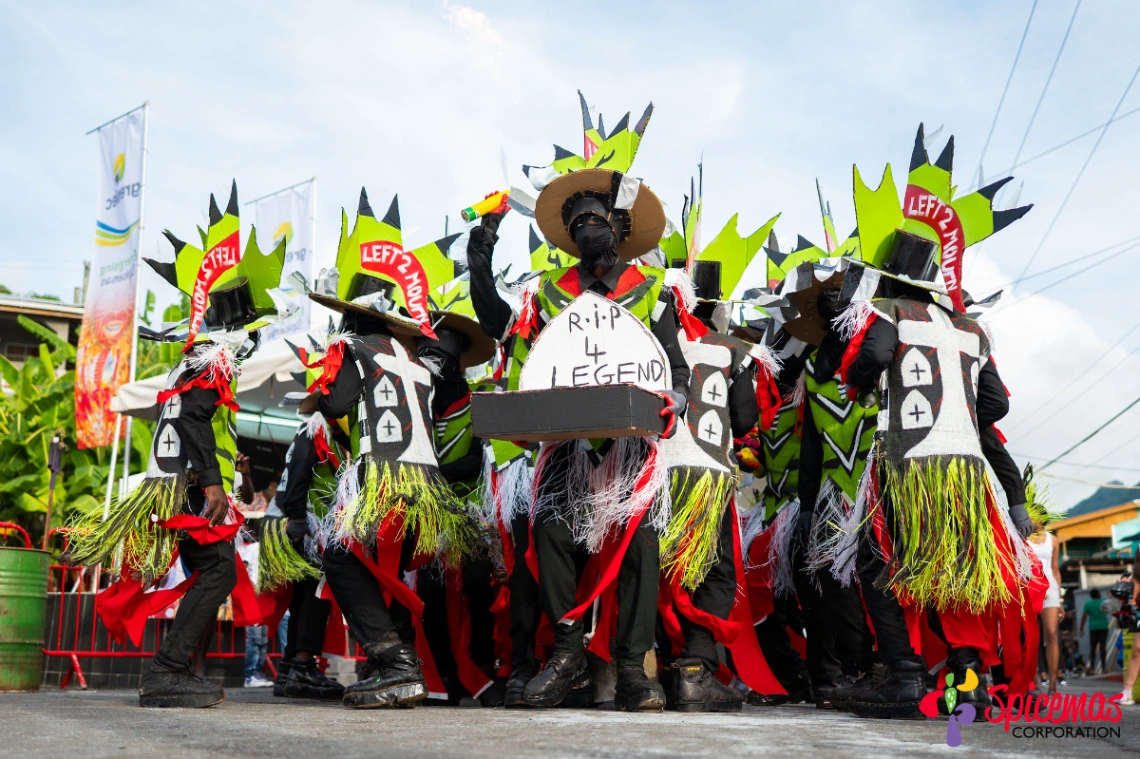
While modern "pretty mas" brings colorful feathers and beads to the streets of Grenada, Traditional Mas is where the heart, history, and raw resistance of Spicemas live. Rooted in West African heritage, anti-colonial satire, and ancestral storytelling, these historic carnival portrayals tell the story of Grenada's people.
Here is a short breakdown of the 8 traditional mas bands that define the cultural identity of Spicemas.
1. Jab Jab
Source Spicemas Grenada
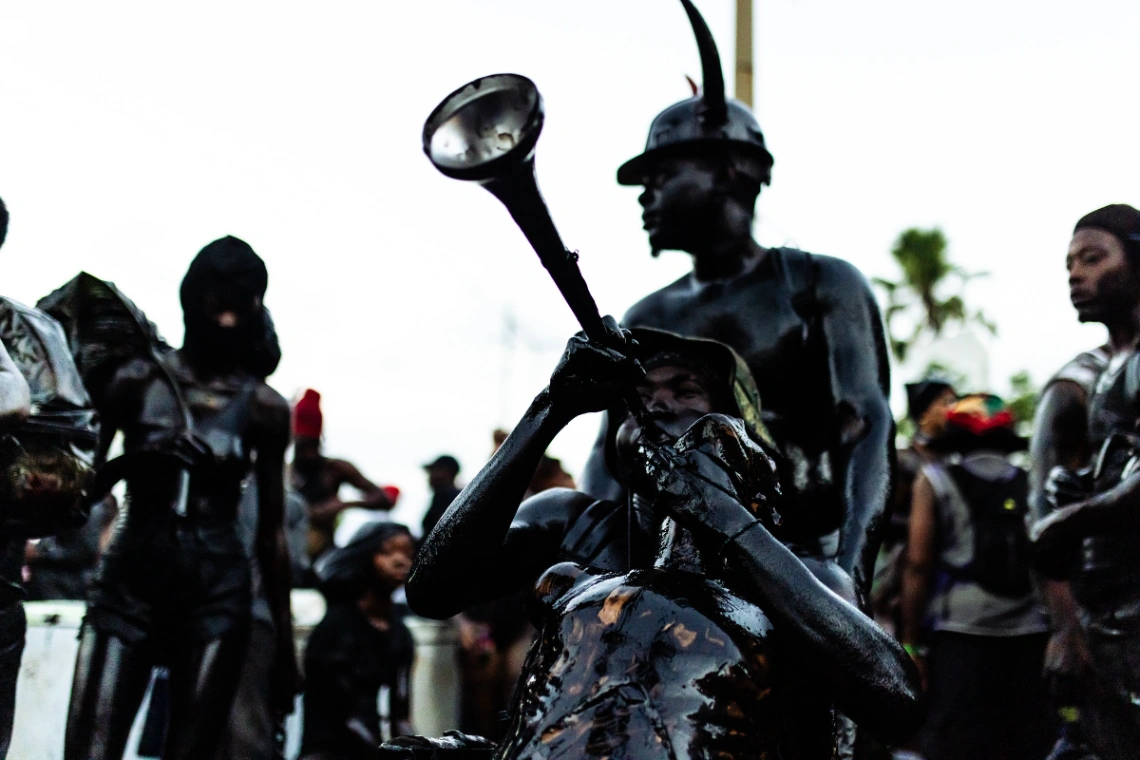
The Origins: Derived from the French word diable (devil), the Jab Jab is Grenada’s most famous and rebellious traditional mas portrayal, dominating the dark streets of J'ouvert morning.
The Look: Masqueraders coat their bodies in motor oil, molasses, or charcoal, wearing horns on their heads and carrying iron chains, padlocks, and conch shells (lambie).
The Meaning: Far from demonic worship, Jab Jab is a powerful act of emancipation, spiritual unity, and anti-colonial defiance, using grease as an equalizer where all social class and status disappear.
📖 Related Deep Dive: For the complete breakdown of J'ouvert culture and Jab Jab ancestral symbolism, read: The Ultimate Guide to Grenada J’ouvert: How to Experience Spicemas Jab Jab.
2. Vieux Corp (Vieux Corps)
The Origins: Rooted heavily in rural parishes like St. Mark’s and St. Patrick’s, Vieux Corp translates from French to "Old Body."
The Look: Masqueraders wear long, dark, flowing gowns made of black or dark cloth, tall pointed conical hats, and wire mesh face masks. On their feet, they wear heavy wooden clogs (sabots) made from mango wood, often fitted with metal plates or nails on the soles.
The Meaning & Sound: The synchronized stomping of their wooden shoes creates a loud, dramatic rhythmic beat. When stomping sharply on the asphalt, the metal strikes the road and throws visible sparks, adding an intense visual effect to their performance. Vieux Corp represents solemn ancestral memory and mourning under plantation slavery.
To see the costume and traditional performance style in motion, check out this short feature on What is Vieux Corps? - Grenada Spicemas.
3. Shortknee
Source Spicemas Grenada
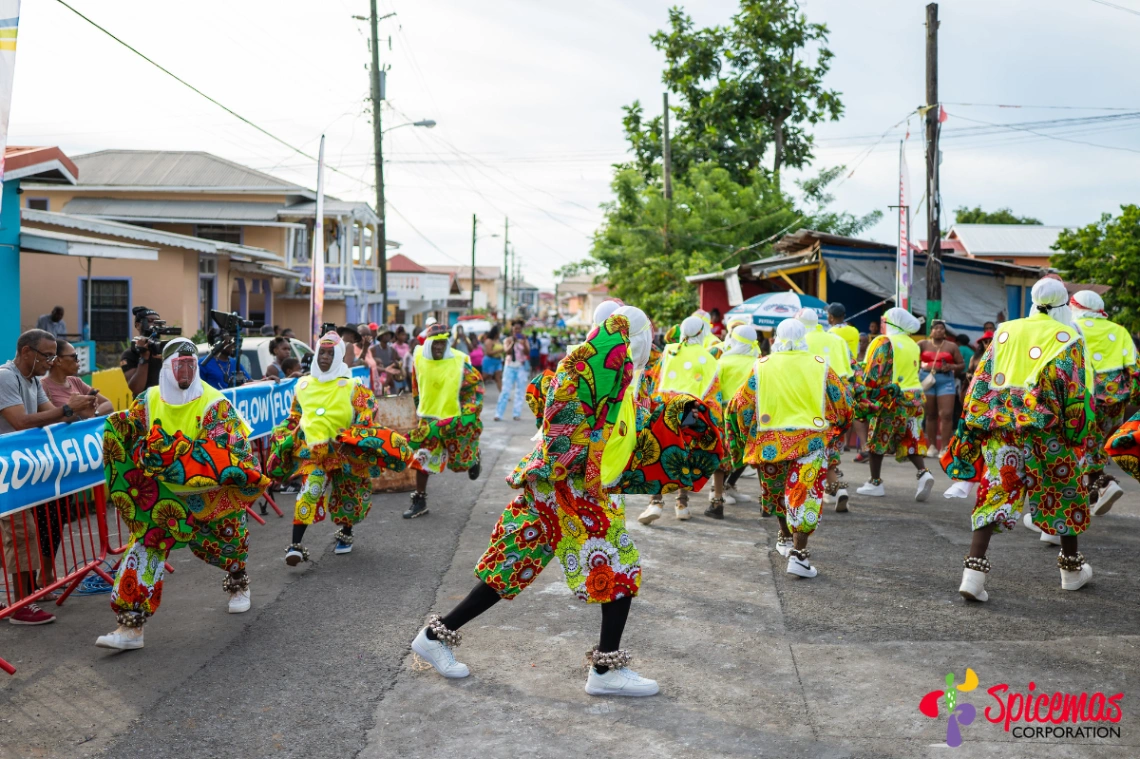
The Origins: Unique to Grenada, particularly the northern parishes of St. Patrick and St. Andrew, the Shortknee is one of the island's most vibrant traditional figures.
The Look: A colorful suit with short pants ending below the knee, long socks, a wire mesh mask, a white headwrap (coif), dozens of brass jingle bells attached to their ankles, and baby powder.
The Meaning: Shortknees recite quick-witted, rhyming poetry that praises locals or pokes fun at village gossip. As they move through the streets, they sprinkle or throw powder on onlookers, a playful ritual representing cleansing and blessing, often while chanting "Pay the Shortknee!" to collect small coins to spare you from a full powdering!
4. Wild Indian
Source Spicemas Grenada
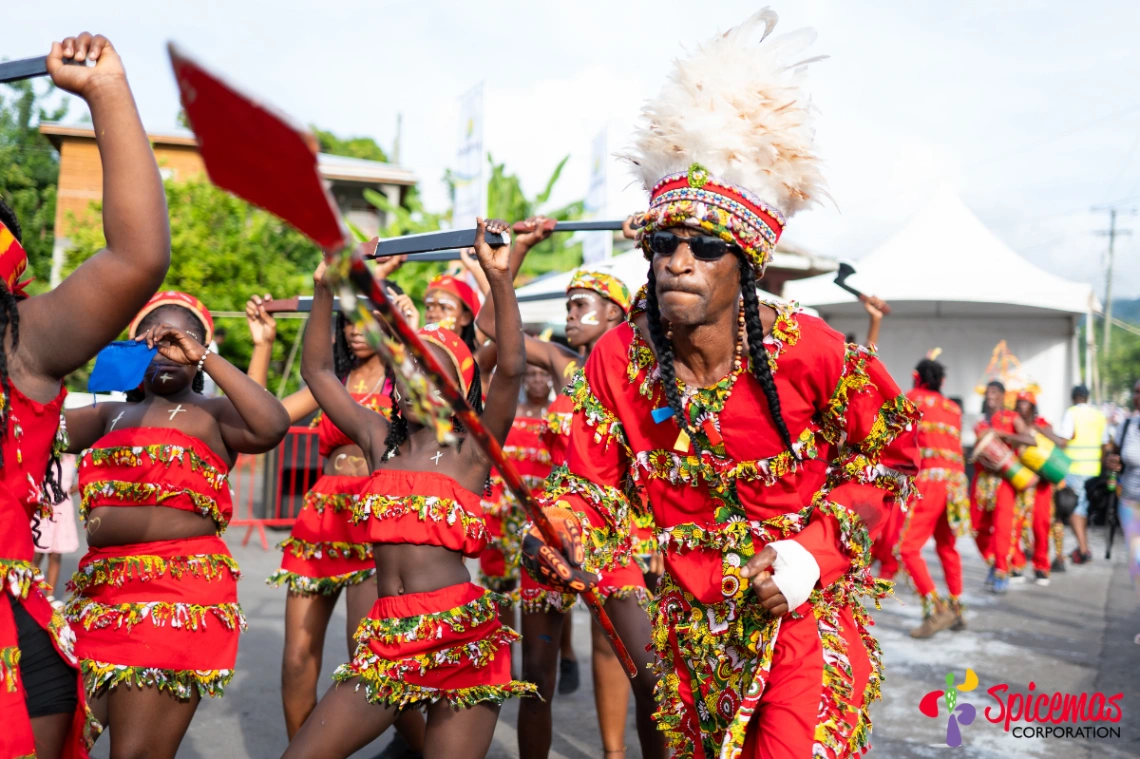
The Origins: Inspired by the indigenous Kalinago and Arawak peoples of the Caribbean.
The Look: Elaborate feathered headdresses, face paint, beaded chest plates, and short skirts or trousers. Masqueraders carry wooden spears, bows, or axes.
The Meaning: Wild Indian bands perform energetic, warrior-style battle dances on the street, chanting in mock indigenous dialects to honor the fierce resistance of indigenous peoples against European colonization.
5. Moko Jumbie
The Origins: Deeply rooted in West African mythology, where Moko represents an ancient guardian deity and Jumbie means spirit or ghost.
The Look: Dancers standing 10 to 15 feet tall on wooden stilts, clad in bright, flowing satin robes, long trousers hiding the stilts, and fabric masks.
The Meaning: Because of their height, Moko Jumbies were believed to see evil from far away and protect the village by walking through crowds to ward off bad spirits. Today, they perform impressive acrobatic stunts and dances.
6. Ole Mas
The Origins: The satirical voice of Spicemas, taking the street early on J'ouvert morning.
The Look: Minimalist and creative: masqueraders wear old clothes paired with hand-painted cardboard placards.
The Meaning: Ole Mas relies on wordplay, double entendres, and sharp political satire. Placards mock current local news stories, politician blunders, utility price hikes, and island scandals.
7. Maypole Dancers
The Origins: A fusion of European Maypole traditions with West African folk music, dance, and drumming rhythms.
The Look: Performers dress in traditional Caribbean folk attire with matching skirts, headwraps, and sashes.
The Meaning: Dancers hold colorful ribbons attached to a central wooden pole. As they dance around the pole in intricate criss-cross patterns, they plait (braid) the ribbons together down the pole and then reverse steps to unplait them without tangling.
8. Sailor Mas
The Origins: Inspired by 19th and 20th-century British, French, and American naval warships docking in Caribbean ports.
The Look: Clean white naval uniforms, sailor caps, decorated pipes, and sometimes exaggerated accessories like giant binoculars or ship models worn as headpieces.
The Meaning: Sailor Mas subverts military authority through comedy. Sub-types like the "Drunken Sailor" mimic exaggerated wobbling and swaggering movements through the streets.
---
🎭 Explore the Official Portrayals: Want to see official photos, registrations, and details for all 8 traditional portrayals? Visit the official Spicemas Corporation page: Spicemas Grenada — Traditional Mas Bands.